Whew, it’s been a week! I’m deep in my revisions cave (for my new Magical Fortune Cookie series–coming to you in February 2024), where I sequester myself and stare at a screen for hours on end. Not only that, but I’ve had some stressors pop up over the last few days: tech problems, miscommunications, awkward run-ins…
I’d say it’s a case of “when it rains, it pours,” but I’m not so sure anymore. Is that the right saying? I always thought the phrase meant trouble showing up in spades. But I had someone use that same saying to indicate lots of good stuff happening.

Which made me wonder: Do I really have the same perspective as others about common phrases? For example, at the dinner table, my family was talking about “an acquired taste.” To me, that meant not being familiar with something, getting exposed to it, and then liking it (case in point: eggplant). To others, it meant an undesirable food, which you eventually enjoyed.
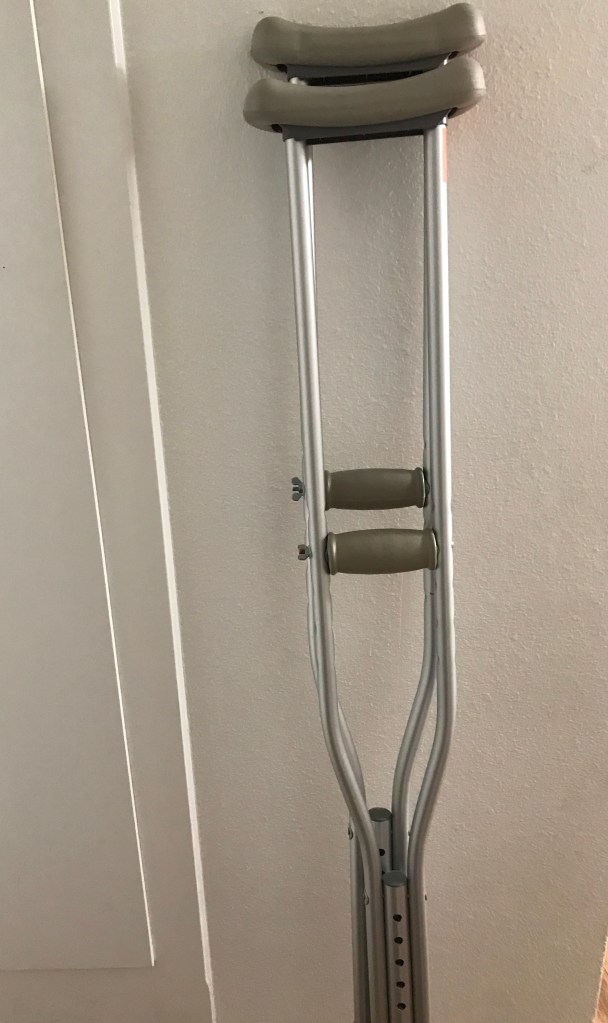
My rabbit hole of thinking led me to reflect on my friend recently wishing my daughter good luck in a sports game by saying, “Break a leg!” Could that be misinterpreted?
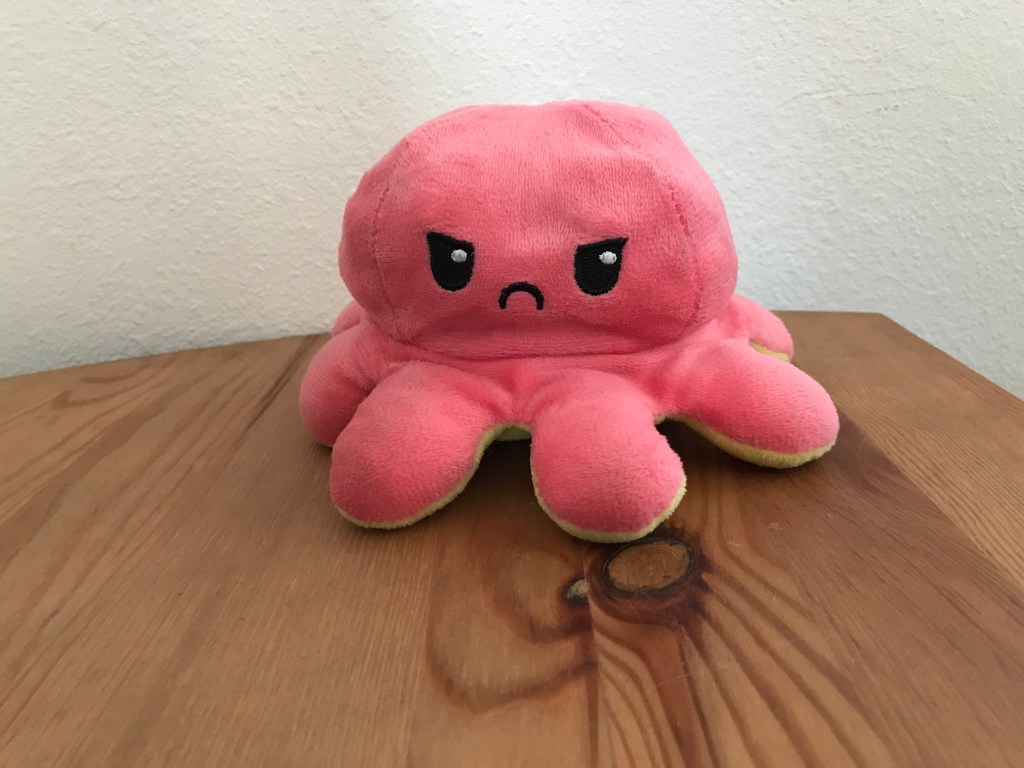
Finally, my husband was using the Duolingo language app last night and surveyed us on what emotion we’d associated with the word “upset”–half of us answered with “mad”; the other half responded with “sad.” If I were to tell you, “I’m upset,” what would you think I’d be feeling?
Ever caught up on how to interpret phrases (or disagreed with others) about them?
 Chicks on the Case
To me When It Rains, It Pours – it means bad luck. When I’m upset my husband stays away from me or it’s usually I’m upset with him and I stay away from him. Paula
LikeLiked by 2 people
Nice examples, Paula. I definitely do the staying away if I’m upset!
LikeLiked by 1 person
Fun with language—excellent post, Jennifer. While learning leadership skills in the corporate world, I came across this truism. “The 500 most used words in the English language have over 5,000 different meanings.” Picking one with the right positive or negative connotations made all the difference. Later, I discovered the right words can form the “subtext” that resonates with readers.
LikeLiked by 3 people
Wow, what a fascinating stat, Grant. Huh. Definitely something for me to consider going forward.
LikeLiked by 2 people
Right, Lisa?
LikeLike
Thank you about the post. Wow! Over five thousand meanings? That’s fascinating (and a little terrifying)!
LikeLiked by 1 person
It’s our own perspective in how we hear common phrases.
LikeLiked by 3 people
Very true. It’s like our take on weather or settings…or most things!
LikeLike
Funny you should mention that, Jen. I was watching the local news here and we’ve had a streak of hot weather (although not as terrible as elsewhere) and the weatherperson said, “another beautiful day” and caught a ton of flack for it! She was reminded—loudly— that not everyone loves 90-degree days.
LikeLiked by 2 people
The other day, my kiddo asked about my ideal weather temps. (I liked hotter; she liked cooler.)
LikeLike
Great post, Jen! And you are not alone, I think, in feeling whatever is swirling around out there right now. I used to tell people, “Trouble always comes in 3s” (so do good things!), but now it’s as if it’s just plain pouring trouble out there in SETS of 3s. (Love the cheerful froggie umbrella, by the way.) I’m blaming everything on the weather–no matter where we are these days, it seems there are unsettling meteorological changes that are affecting everyone. Way back I wrote a Chicks post about the Year of the (Fire) Monkey. I feel as if he’s back. But congrats again on your new series and finishing up Book 1! That’s good news. So…at least 2 more good things to come! (Oh, and I think of upset as “frustrated.”)
LikeLiked by 1 person
Thanks, Lisa! Oh, I hadn’t heard about that phrase of coming in 3s. Yeah, let’s blame it all on weather. (It constantly feels like the Year of the Fire [sans monkey] over here.)
And, no matter the definition, I’ll try hard not to make you upset! 🙂
LikeLiked by 1 person
You could never upset me, Jen! Here in New England (VT, mainly) it’s not fire but massive flooding. Sigh.
LikeLiked by 1 person
I know. Hugs to all of you.
LikeLiked by 1 person
Words and phrases definitely can have different meanings for different people, and can change over the years. Just look at the word, “literally.”
I always thought of “when it rains it pours” as meaning bad stuff, but perhaps that’s simply because I’m not a fan of the rain. And to me, “upset” means a combination of sad and frustrated, with perhaps a bit of anger included.
Fascinating discussion!
LikeLiked by 3 people
Yeah, literally, Leslie. 🙂
Hmm, I wonder what El thinks about raining, pouring…
LikeLike
I think some of those depend on context. You can be sad upset and angry upset. But when it rains it pours is definitely bad luck.
LikeLiked by 2 people
Thanks for chiming in, Mark! Maybe we should incorporate “sad upset” and “angry upset” in our vocab to be clear when talking to others.
LikeLike
One of the hallmarks of my Natalie McMasters Mysteries is my use of Gen Z slang in Nattie’s voice. I don’t usually define the terms – I’m Old School, so I let my readers get the meaning by context or look it up if they want to know. Some of these locutions can be fairly obtuse. See if you can understand the following (no cheating, now!)
“…that lewk is way cheugy for me.”
“Most of them are total pick me girls.”
“The vibe in the fam is deadass cringy ”
“She’s totally the CEO of realness”
LikeLiked by 1 person
Okay, I’m too old for this slang. Haven’t a clue! (And just today, my kid was saying “pulling” in a way that wasn’t the physical push/pull variety.)
LikeLike
Ooops! Jen, “pull” means to get together with someone of the opposite sex. How old is your kid?
LikeLiked by 1 person
Eek. She didn’t mean “pull” that way–thankfully, just pulling your weight. And she just corrected herself to say “hard carry.”
LikeLike
Interesting, Jen! I always think of “when it rains it pours” as when one bad thing happens and then it snowballs into a zillion more. That’s probably more of a case of confirmation bias, though.
For me “upset” is a mild version of whatever is going to happen next—fury or heartbreak or frazzle.
LikeLiked by 1 person
Thanks, Becky! And for some reason, I really like the way “frazzle” looks on the page. It seems like such a cozy word even though it’s not positive.
LikeLike
I love this topic! I’m fascinated on out where expressions come from. I’ve been thinking about the phrase “on the line.” Because I am literally on the line picketing for the WGA, so the phrase has a very literal meaning to me now.
LikeLiked by 2 people
Is it telling that I read this first as “online” instead of “on the line?” But cheering & supporting you as you picket, El!
LikeLike
Oooooo! I love this, Jen!! I just had an interesting conversation with a client who turned “wolf in sheep’s clothing” on its ear by saying they’re trying to avoid a sheep in wolf’s clothing (that is, they seek independent alphas rather than those gentlest of lambs). So fascinating!! Also intrigued by the layers of meaning for “upset.”
Congrats on the new series and emerging from the cave!
LikeLiked by 1 person
Hmm, I’m thinking that a sheep in wolf’s clothing works well in a romance storyline…
LikeLiked by 1 person
YES!! Now that’s super interesting!
LikeLiked by 1 person
Not only do words/phrases have differing, sometimes contradictory, meanings, but the meaning can depend on when it was used. An easy example is gay – a comment about having a gay time has very different meanings if it was spoken in 1900 or 2000! One of my favorite English professors used to give a Dirty Words lecture on occasion and spoke about how words can go from acceptable to rude to filthy and back over the centuries.
LikeLiked by 1 person
Oh my, what a lecture!
LikeLike
Especially when he got to “the two dirtiest words in the English language ” & waited so people could leave if they would be offended!
LikeLiked by 1 person
Upset means not very happy at this moment. When it Rains it Pours is usually bad luck. Like the flooding in NE now. But then, different strokes for different folks.
LikeLiked by 1 person
Thanks, Madeleine. That flooding… 😦
LikeLike