
We’re thrilled to welcome Julie Mulhern back to the coop! Today the multi-talented, multi-series-writing author gives us the long and short of writing shorter form fiction–complete with a prequel preview. Take it away, Julie!
Part of the Process
It’s a truth universally acknowledged, at least at my house, that it’s harder for yours truly to write a short story than a novel.
Novels allow space.
Stories must be tight.
Novels let characters stumble and fall and pull themselves up.
Stories insist that characters stay on point
And try, just try, to find a body, investigate, and solve the crime in less than twenty thousand words.
Right now, I’m working on a prequel novella for a 1920s mystery.
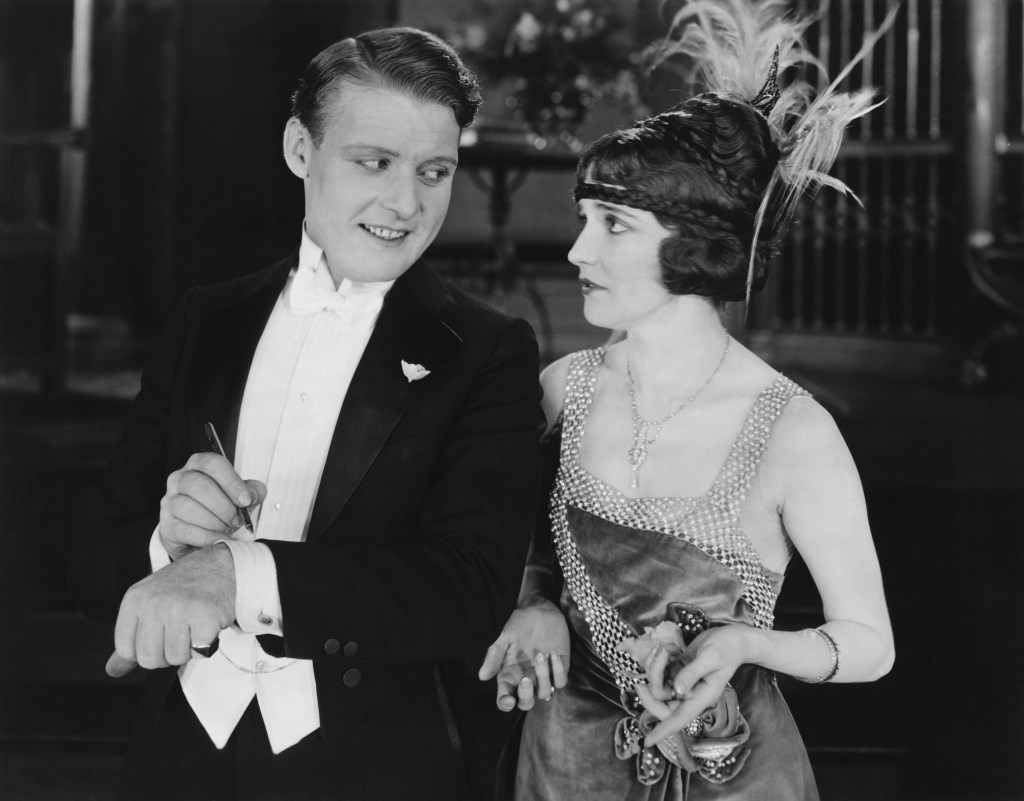
I have an outline, which for a pantser like me is unheard of. Mind you, my outlines tend to go something like this:
Chapter 1 – Freddie and Nick go to a speakeasy in Harlem. Before they enter, Bony approaches Freddie, and she places a bet with him. Nick disapproves. Freddie is annoyed with Nick, but swallows her feelings so that their evening isn’t ruined. Something about women subverting their feelings to keep men happy.
Which translates to this, thus far:
Nick smirked at her. Smirked. As if his knowing about a new club before she did was a feather is his cap.
Freddie remained dubious. There were plenty of walk-up speaks in the fifties. They didn’t need to motor to Harlem to find one. She paused on the cracked sidewalk, taking in the spiffy red door, made smarter by its neighbors, a laundry with dingy windows to the left and a cigar store to the right.
Around her, the other people on the sidewalk—people in evening clothes, who were presumably eager to reach their destinations—grumbled at the white woman who impeded the flow of traffic.
“Why this place?” she asked.
“There’s a singer I’d like to hear.” Nick produced shows on Broadway. He was always on the lookout for new talent.
“Miss Freddie?”
She turned and, in the yellow glow cast by the nearest streetlight, spotted a boy made up of knobby knees, sharp elbows, and big, dark eyes. “Bony!”
The boy smiled. That smile. The sweetest, friendliest expression to ever grace a face.
“What a fantabulous surprise.” She glanced at her watch and frowned. Surely a child Bony’s age should be in bed. What was he doing on the streets at this hour?
As if he’d read her mind, he held up a policy book. “Place a bet?”
“Bony Johnson, what are you doing?”
His smile faltered, and he ducked his head
“Where’s your mama?” Did Penelope know her son was in the numbers game?
Bony’s smile disappeared entirely. “She’s not doing so good.”
Penelope Johnson, her parents’ upstairs maid for nearly twenty years, had helped raise her. When Penelope left their employ for a better job, Freddie had wept. “What’s wrong?”
Bony studied the sidewalk. “Cancer.”
Freddie’s heart sank. Was Penelope so ill that Bony had to keep a policy book to support her? “I’m so sorry. May I visit her?” She’d take fresh flowers and a hamper of food. She’d offer money, and Penelope would refuse. She’d insist.
“She’s not taking visitors, but I’ll tell her you asked after her.”
Freddie swallowed a frustrated sigh. If she talked to Penelope, she could get Bony sorted, get him into school, and off the streets. Her eyes narrowed on the book clutched in Bony’s left hand. “How much do you need before you can go home?”
“Two dollars.”
“Then that’s what I’ll bet.”
The boy nodded, and the smile made a return. “Your numbers?”
“Six-two-seven.”
His gaze caught hers. He knew what those numbers meant. He gave a quick nod, made a note in his book, and handed her a receipt. “Thank you, Miss Freddie.”
“Bony, I want you to come see me. I’m at the magazine office most days. Gotham. This week.” She speared him with a serious gaze. “I mean it.”
“Yes, Miss Freddie.” He shuffled his feet as if he were eager to be gone, and she doubted his sincerity.
“I’ll see you soon, Bony.” If she didn’t, she’d find him.
He nodded and took off at a brisk pace.
Next to her, Nick bristled, a veritable porcupine of disapproval. He waited till Bony disappeared round the corner before he asked, “You know that boy?”
Surely the answer was obvious. “His mother used to work for my parents.When he was little, she brought him to work.”
“How old is he?”
“Fourteen.”
“He should be home. In bed.”
She didn’t disagree. “You heard him. His mother is sick.”
“Your placing a bet encourages his bad behavior.”
Nick regularly bet princely sums in casinos, and he was scolding her for a two-dollar bet? Or maybe he disapproved of Bony? If the boy needed to support his mother, running numbers was a better way to make a living than toiling in a sweat shop. She tamped down her excellent points. Nick didn’t like it when she made sense. It was easier to hold her tongue than listen to his detailed explanation of all the ways she was wrong.
He gently claimed her elbow and walked her toward the red door. “How did you select your numbers?”
“I always bet those numbers.” June twenty-seventh. Gray’s birthday. He’d have turned thirty this summer, if he’d returned home from the war. “In memory of my brother.”
A frown darkened Nick’s handsome face. Truly, the man was ridiculously handsome, with strong cheek bones, full lips, a divot in his chin, and dark blond hair. When he smiled, he was devastating. When he frowned, he looked like a spoiled child. “How often do you bet?”
“Why on earth do you care?” She had plenty of money—the trust her grandparents had left her, her job at Gotham—a few bets didn’t begin to make a dint.
“It’s unseemly. And you might lose.” Was her worried about appearances or her?
“You play roulette and poker.” And he regularly lost.
“That’s different.”
“Why?”
“It’s in a casino, not on the street.” Nick bet in a posh environment, where men in tuxedos and ladies in silk evening gowns sipped Champagne or good scotch before they rolled the dice. When Nick handed over his money, he received chips, not a slightly grubby paper receipt like the one in her hand.
Still, gambling was gambling.
Nick’s bets at a casino lined its owner’s pockets. The numbers games fueled Harlem. Bony’s boss and men like him loaned money to black businessmen (who white bankers wouldn’t let through their doors). They invested in community schools and programs. They gave money to worthy causes.
Nick opened the door, and his hand on her lower back propelled her inside.
The club was dark and smoky, and a trio played passable jazz in the corner. A bar made from a heavy, dark-stained wood reached across the back wall. Behind it, a mirror reached for the tin ceiling. As speaks went, she’d seen it a thousand times.
Nick led her to a small table and pulled out her chair.
She sat, and Nick joined her, reaching for her hand. “Thank you for coming. Maybe you can write about this place.”
Not likely. It was nothing special, and the owner didn’t advertise in the magazine. The only thing that made the place unique was the patrons. The club was integrated, serving both black and white customers. That made for a nice change.
As you can see, I’m only part of the way there. If you’ll excuse me, I have words to conjure.
But, before I go, do you read historical mysteries? If so, what’s your favorite era?
Julie Mulhern is the USA Today bestselling author of The Country Club Murders and the Poppy Fields Adventures.

She is a Kansas City native who grew up on a steady diet of Agatha Christie. She spends her spare time whipping up gourmet meals for her family, working out at the gym and finding new ways to keep her house spotlessly clean–and she’s got an active imagination. Truth is–she’s an expert at calling for take-out, she grumbles about walking the dog and the dust bunnies under the bed have grown into dust lions.
 Chicks on the Case
I do enjoy historical cozies and the time period I like the most is the 1920’s and 30’s. The time of the Flappers and reading about the fashions of the time, the cars.
LikeLiked by 4 people
The cocktails, the clothes, the way EVERYTHING changed for women…
LikeLike
Fun post, Julie! I’m a reformed Pantser turned Plotter. I now strive to make each scene the equivalent of a short story, packing the narrative essentials into each scene. When you add up those bits, it’s nearly four dozen things for writers to consider. The chief challenge: deciding what to exclude based on writing principles, not rules.
LikeLiked by 2 people
Loved the preview Julie. Hope it is the start of a new series. I am a big fan of historical mysteries. Favourite eras are – Regency, 1920’s, 1940’s (love WW2 history) and the early 1960’s (a favourite for the fashion & music). There are lots of Regency & 20’s but I struggle to find good 60’s mysteries.
LikeLiked by 1 person
Great story, Julie. I do read historicals and I don’t have a particularly favorite period. I write a series set in WWII.
LikeLiked by 2 people
Love your Homefront Mysteries, Liz!
LikeLiked by 1 person
Thank you!
LikeLike
Which are excellent, Liz!
Hi Julie! *waving madly* I feel your pain writing short. I used to write for kids and I’ll tell you what … there’s nothing harder than writing a children’s picture book! Tell a complete, compelling, and fun story in 500 words?? So much impossible!
I read widely under the crime fiction umbrella and do enjoy historicals from all eras.
Congrats on all your success!
LikeLiked by 1 person
Thank you!
LikeLike
Loved “Sweet Liar” by Jude Deveraux: time travel 1928.
Enjoy the medieval era. And especially love YOUR Country Club Murders!!! So thankful you are willing to share your talent with us!!! Thank you!
LikeLiked by 3 people
So happy to hear you’re enjoying Ellison and the gang!
LikeLike
Thanks for showing us your process, Julie. I am a pantser with a guilt complex that I am not a plotter (twelve years of Catholic school will do that to you). I find your short blurbs most instructive.
I write historical mysteries, namely Sherlock Holmes stories in the style of Conan Doyle. My Holmes stories are set from the 1870s to the advent of WWI. I also wrote an H P Lovecraft pastiche set in New York City in 1930.
Tom Burns
LikeLiked by 3 people
No guilt! Everyone has their own process!
LikeLike
Thanks for being our guest today, Julie! Happy writing with that novella!
I read historical at times (but not often); I’ll read any era, but I do have a soft spot for Regencies because of Austen.
LikeLiked by 1 person
Hi Julie, Thanks so much for being our guest on Chicks today. This excerpt from your novella-in-progress is amazing–please write fast! I love both historical fiction and nonfic. Partial to the Victorian era–probably all those gas lamps and shining woodwork. But, of course…the good old days, they were terrible. All an illusion, sigh–which makes them more fascinating, in my book.
LikeLiked by 1 person
Historical mysteries are my favorite genre and I am in awe of all who write them. My mom just passed away and I had to go back to NY to get her condo ready for market. The only thing that kept me from breaking down was the steady stream of historicals I took out of the library via e-book.
And welcome back, Julie!!
LikeLiked by 2 people
I do love historicals–have done since I was a kid. It’s such a great way to learn about history AND get a great story in the process. As for the era, any will do, if it’s engaging and compelling. (I went through a phase where I read a lot of books set in ancient Rome.) But I do have a soft spot for the early 20th century.
Thanks so much for visiting the Chicks today, Julie, and thanks for the sneak peek of the prequel–it starts off great!
LikeLiked by 1 person
I love historical mysteries, Julie! My favorite period is the time between World War I and the end of World War II. I think it’s the Agatha Christie influence on me.
LikeLiked by 1 person
I seem to be reading more and more historicals. I’d love to find more set in the US, but many of them seem to be set in England or other parts of Europe.
LikeLiked by 1 person
This is so great, Julie!! Love this preview of coming attractions and can’t wait to read the novella!
LikeLiked by 1 person
Sounds fun deborahortega229@yahoo.com
LikeLike