Today we Chicks are delighted to welcome lovely and talented author Karina Bartow back to the blog. Karina is sharing her latest title in The Undefeated Detective series, ACCIDENTAL ALLIES, and posing a tricky question for us authors and readers…
How Deep Should Mysteries Delve?
I’m so glad to be back on Chicks on the Case and appreciate the Chicks for having me! My appearance a couple of years ago debated whether or not readers want to guess the outcome of a whodunit early on in the plot. Today, however, I’m taking up how mysterious a crime novel should be.
When I started writing in 2008, I all but ruled out writing mysteries. I didn’t read many aside from Scooby Doo Mysteries Inc. chapter books. Plus, composing one intimidated me, as it seemed complicated to set up twists and turns along with danger lurking around every corner. Over fifteen years later, however, I love it!
In fact, I ended up carrying the obscurity a tad too far on several occasions during my early days. My debut novel, Husband in Hiding, begins with a flashback, highlighting how the protagonists met as children. When I first wrote it, I wanted to leave readers guessing whether or not the little girl was actually the woman the story follows, Minka, until the big reveal a few chapters later. In my mind, it added to the suspense and intrigue of the opening.
But my editor didn’t view it that way.
At the top of her list of revisions, she instructed me to identify the girl, popping my bubble of having such a build-up. Being inexperienced, I emailed my publisher straight away to try to appeal the direction, but he agreed that the prologue was no place to withhold the crucial information.
Even so, I tried the game again. In my second book, Forgetting My Way Back to You, I named a character in the prologue but left everything about him a mystery, though it was a love story. Working with a different company and editor, I didn’t get any pushback over it, which made me giddy. I imagined readers paging through the book, anxious to learn the character’s identity until he was unmasked in the end.
While a few gave me the kind of feedback about him that I hoped for, more readers than not missed the “bombshell” altogether. In my disappointment, I reflected on the reason it didn’t hold the gravity I anticipated, and I realized my lack of embellishing on his background didn’t permit people to connect with him. Thus, they forgot about him by the epilogue, making the revelation anticlimactic.
A few months ago, I found myself on the opposite end of the picture with a movie I watched. The previews looked great, promising edge-of-your-seat action, which it did indeed have. From the beginning, however, it left you to wonder who the protagonist really was and the motivations of everybody around her. Hence, it was difficult to follow most of the flick because I couldn’t differentiate who was working with whom and what their interests were. Rather than being engaged with the thriller, I was primarily confused by it.
Does this mean we have to lay all our cards out on the table, with no secrets from the reader? Of course not. Part of what hooks an audience is the fact that characters have secrets, and they want to unravel them. To foster that urge, though, you have to provide enough about a character or storyline that the reader can connect with them—even if unexpected twists later defy what they thought they knew.
For instance, you might have a character that’s a mere silhouette, lurking behind corners. If they’re only mentioned once, readers likely won’t care much about who it turns out to be. On the other hand, describing their habits, how they interact with other characters, and hinting to their personality will make your audience form a relationship with them, despite their lack of a name or motivations.
That’s my opinion, anyhow. What’s your take? Do you like unknowns all over the place, or do you prefer a sense of transparency?
ABOUT THE BOOK:

Everybody’s experienced a rocky start to a new job, but few can top Minka Avery’s return to Orlando PD.
After six years as a stay-at-home mom, Minka’s nervous but excited to sit at a detective’s desk again. Before she has a chance to break in her badge, however, her career resumes with a bang when someone bombs the county courthouse.
With many disillusioned with the justice system, several brow-raising suspects emerge right away. Minka and her new partner, Renee, follow several tips that lead to dead ends, until they zero in on the courthouse’s former security guard. Their attempts to apprehend him send the city and police department into chaos. Meanwhile, Minka contends with the lingering suspicion of another party being involved. Could his accomplice be closer than she thinks?
ABOUT THE AUTHOR:
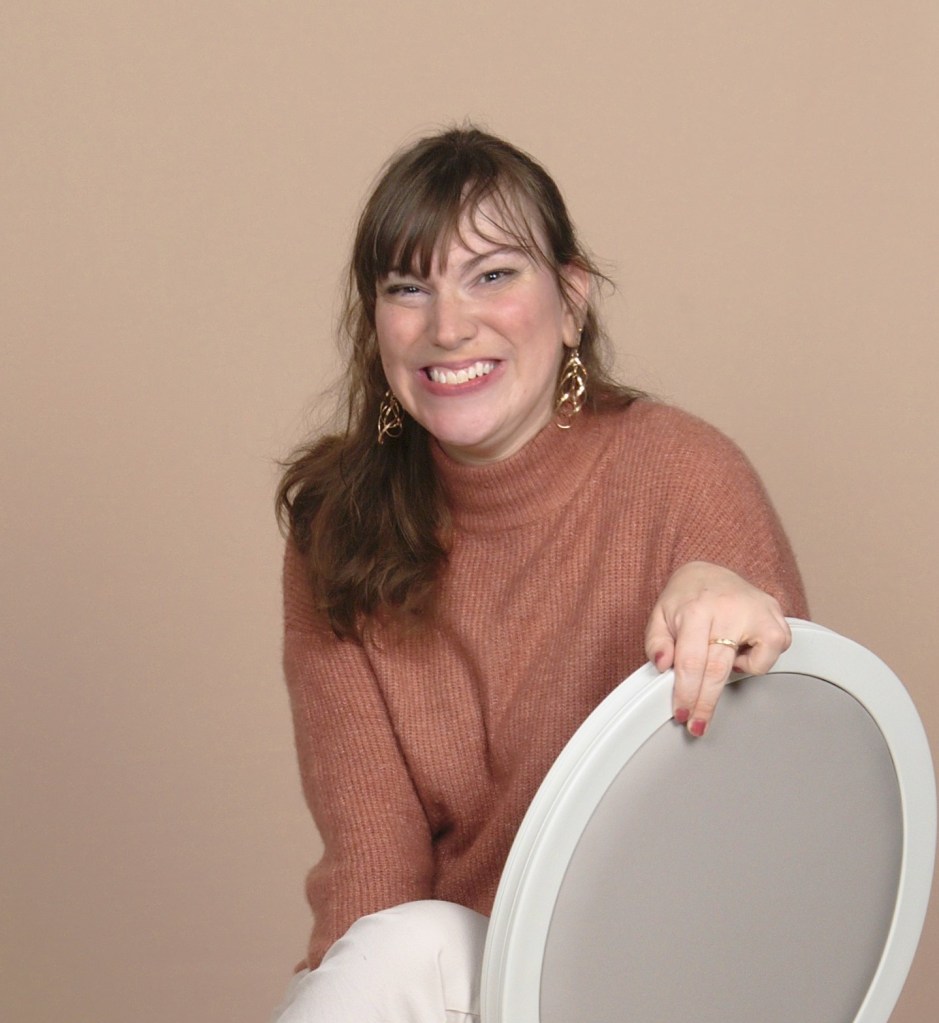
KARINA BARTOW grew up and still lives in Northern Ohio. Though born with Cerebral Palsy, she’s never allowed her disability to define her. Rather, she’s used her experiences to breathe life into characters who have physical limitations, but like her, are determined not to let them stand in the way of the life they want. Her works include Husband in Hiding, Brother of Interest, Forgetting My Way Back to You, and Wrong Line, Right Connection. She may only be able to type with one hand, but she writes with her whole heart! To learn more about Karina and her books, visit her website at KarinaBartow.com.
 Chicks on the Case
Great question, Karina. The question placed in the minds of readers (i.e., narrative drive) is one of my favorites. I’ve found through reading of masterworks how narrative drive performs best when coupled with a combination of foreshadowing and consistent payoffs along the way to story’s end. Such breadcrumbs work best when spaced so that the reader can find them and connect the payoff to the initial question. As you described, holding the “rewards” to the end doesn’t work for most readers.
LikeLiked by 3 people
Agreed, Grant!
LikeLiked by 1 person
I find that the secrets and the payoffs need to be interspersed throughout. Hold too much back and people get lost. Give everything away and they get bored.
Congratulations on the new book!
LikeLiked by 3 people
That’s a good balance, Liz. Thank you!
LikeLiked by 1 person
Karina, we’re so happy to have you on Chicks today. Congrats on Accidental Allies–and your dedication to tackling these tough mysteries of the writing process. Personally, I prefer transparency from each point-of-view character–and if it’s a sole protagonist it’s a must for me. But if those characters don’t notice all the details and I do, that’s even better! (That goes for my writing as well as reading–did I mention I’m a pantser?)
LikeLiked by 2 people
I am, too, Lisa! Thank you again for having me!
LikeLiked by 1 person
Hi Minka and thanks for your post. Your question is not something I generally think about. I am an indie author, so I don’t have an editor to tell me what I must do. I tend to avoid spoonfeeding readers; for example, in my Natalie McMasters Mysteries, Nattie uses a lot of Gen Z slang, and I don’t define the terminology as it comes up, leaving the reader to understand it from context, or look it up in one of many available online dictionaries. I have gotten some pushback that it makes parts of the text hard to understand, but several aspects of the Natalie books may put off readers (i.e. sex, violence, politics), so I just accept that series is not for everyone and go on with my writing. Also, I’m told that my plots can get convoluted with many twists and turns, but again, that’s how I write this series. I do have beta readers though, and I do listen to them if they tell me that they’re getting hopelessly confused, kicked out of the story, etc., and make revisions if necessary.
Your new book sounds interesting. I’ll be sure to take a look at it.
Tom Burns
LikeLiked by 3 people
Interesting perspective, Tom. I appreciate your thoughts!
LikeLike
Welcome back, Karina! Congrats on Accidental Allies–and I love the silhouettes on the cover! I mostly like transparency, especially with main characters, but I do appreciate unknowns mixed in; they’re like sprinkles on the mystery cupcake.
LikeLiked by 4 people
Thank you, Jennifer! Same here!
LikeLike
Thank you , Jennifer! Same here! (Sorry for the duplicate message)
LikeLike
Karina, welcome back and thanks so much for visiting us. Your book sounds wonderful. As to your question, I do like unknowns. I find it exciting to suddenly discover something unexpected about a character, especially someone who seemed almost unobtrusive to begin with. You made me think of something I’m proud of that I did in my book, MARDI GRAS MURDER. In the first chapter, a flood delivers a victim to the stream behind Crozat B&B. No one knows who he is. I reference him a few times in the following many chapters but other stories take precedence. Then I reveal a twist that makes information about the victim pivotal to the whole plot.
God knows if I’ll ever be that clever again!
LikeLiked by 2 people
Wow, Ellen! That sounds intriguing!
LikeLike
Wow, Ellen! That sounds intriguing! (Sorry for the duplicate message)
LikeLike
You bring up such a good point, Karina. Just last week I was asked to read a friend’s rough draft manuscript, and my major comment was, “You need to give more information and life to your character from the start; otherwise no one will care about her.”
As for your question, I don’t mind unknowns as long as the author plays fair, and I have the chance to figure them out for myself.
Thanks so much for visiting the Chicks again, and congrats on the new book–it looks terrific!
LikeLiked by 2 people
Thanks very much, Leslie! Sounds like good advice.
LikeLike
I think the key is how things like that are explained/revealed. A random character in a prologue? I’m not going to care. In fact, I might be annoyed if you don’t reveal how it fits in within a couple of chapters. However, dribble bits of information throughout the entire story? I’ll be hooked and excited at the big reveal.
LikeLiked by 2 people
Thanks, Mark. I was young but have learned a lot since then.
LikeLiked by 1 person
Congratulations on the new book, Karina! To tell/not to tell is a balancing act. However, if the author bases too much on withholding information it undermines fictional authenticity (an oxymoron, I know) and I feel tricked. I like to think of teasers popping up along the way.
LikeLiked by 2 people
Teasers are fun, Priscilla!
LikeLiked by 2 people
Welcome back, Karina, and congrats on the latest!!
I do love the unknown and am forever looking for ancillary characters who may play a bigger part. But I have overdone it a bit in my own writing. I shared an early draft of my first book, and when my beta reader got to the big reveal of whodunnit, he turned to me and said, “Who is that?” Whoops. I rectified, but it still makes me laugh!
LikeLiked by 2 people
I can definitely relate, Kathleen! Thank you!
LikeLiked by 1 person
Great post. I also wrestle with when and how much to reveal.
LikeLiked by 1 person
Understood, Janet. Thanks!
LikeLiked by 1 person
Thank you so much for visiting us, Karina!! Very thoughtful…and congratulations on your book too!
LikeLiked by 1 person
Thank you very much, Cynthia!
LikeLike