It’s such a delight for us to welcome one of our favorite authors and people, Nadine Nettmann today! It’s always so exciting and humbling for us Chicks to help launch a brand-spankin’-new book!
Hello, Chicks on the Case! Thanks so much for having me here. Today marks the publication of The Bootlegger’s Daughter and I’m so excited! This book was years in the making so to have it actually out in the world is really thrilling and I love that I’m celebrating the publication here with you!
The book is set in Los Angeles, which is where I was born and raised. Growing up in Los Angeles, I always loved how so many notable monuments in the city were built during the 1920s. The Hollywood Sign, which recently celebrated its 100th anniversary, Grauman’s Chinese Theatre, Biltmore Hotel, the Hollywood Roosevelt, Hollywood Bowl, Rose Bowl, LA Coliseum, Greystone Mansion, and much, much more.
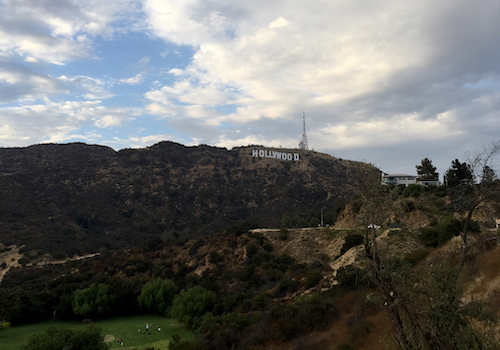
These key landmarks of the city’s history are still on display today as you drive around, but there’s also a hidden history that you don’t see.
A history so key to the city that it was on the seal from 1854 to 1905. A history you don’t think of when you think of Los Angeles.
Winemaking.
Now let’s be honest, when people think of wine in California, they don’t think of Los Angeles. They think of Sonoma, Napa Valley, Paso Robles, Temecula, Santa Barbara, and more. All of these notable wine regions. But did you know that Los Angeles was once the key wine region of the entire state? Basically the Napa of California before, well, Napa.
Let’s dive in. Winemaking in Los Angeles dates back to the late 1700s and to give you a timeframe, the city was founded in 1781. These winemaking roots go deep.
By the 1850s, the city of Los Angeles had over 100 wineries producing millions of gallons of wine and vineyards stretched far and wide. Even the city seal for fifty years was a cluster of grapes framed by two large leaves, as if it was still on the vine and ready to be harvested.
So what happened? While there are many factors that led to grape growing and winemaking falling by the wayside, a key one was Prohibition. That moment in 1919 when alcohol was no longer legal and the precious land that once held vines was swapped out for different crops such as citrus, walnuts, and eventually, the city itself. As Los Angeles grew, so did homes and commercial buildings on land that was previously vineyards.
But the storied history still remains, immortalized with streets named after wineries and even the famous street that is so often referenced in Hollywood: Vine Street.
Vines from those days still exist, too, and can be found in Downtown Los Angeles at Olvera Street or at the San Gabriel Mission, where you can stand under the Mother Vine, which dates back to the late 1700s and still produces grapes.
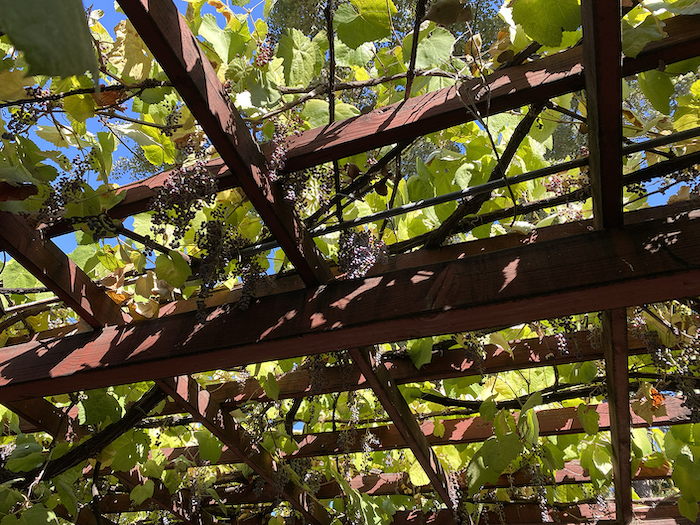
As for winemaking in Los Angeles, the iconic San Antonio Winery, founded in 1917 and the only local winery to survive Prohibition, is still going strong over 100 years later. There’s also been a resurgence in the region and new wineries have popped up, some only steps from where the original vines grew near downtown, such as the Angeleno Wine Company, and Byron Blatty who actually makes wine from the Mother Vine. Vineyards can now be seen on the slopes near the Hollywood Sign, the hills of Malibu, and not far from The Getty.
Los Angeles and wine, a part of history and present day.
Question: Have you discovered a fun fact or history about your hometown?
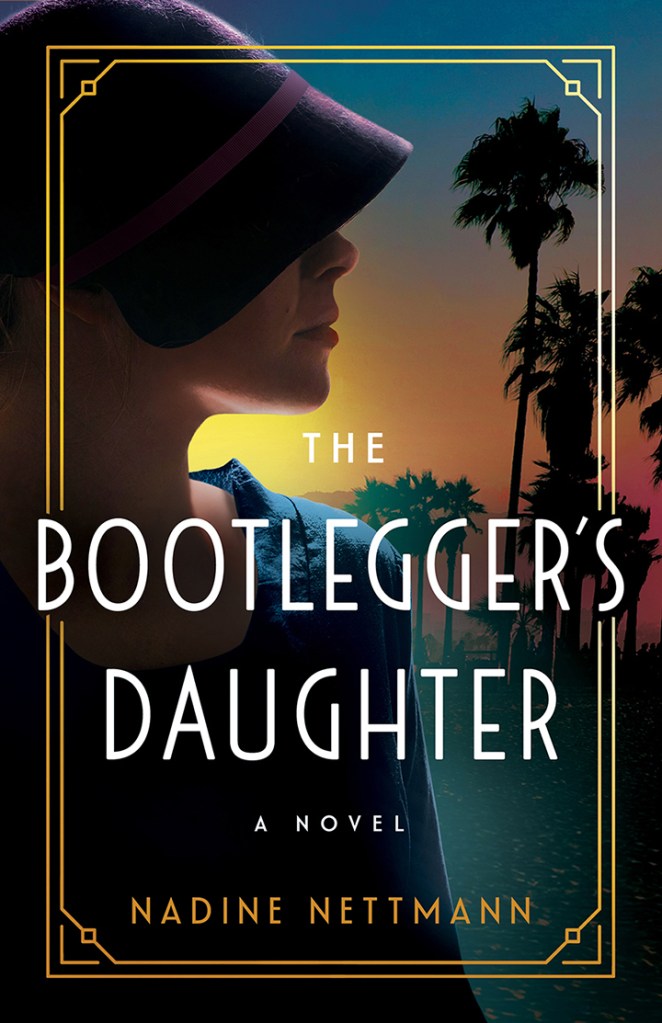
About The Bootlegger’s Daughter:
In Prohibition-era Los Angeles, two women on opposite sides of the law must take control of their lives, make their marks, and try to survive. Even if it means crossing the line.
It’s 1927. Letty Hart’s father is long gone, but his old winery provides a meager wage and a legal livelihood for selling sacramental wine. But when that contract goes bust, Letty stumbles upon a desperate option: her father’s hidden cellar—and enough liquor to tempt Letty to bootleg the secret stash. In an underworld dominated by merciless men, Letty is building an empire.
Officer Annabel Forman deserves to be the first female detective in the LAPD. But after two years on the force, she’s still consigned to clerical work and policing dance halls. When Annabel connects a series of unsolved murders to bootlegging, it’s a chance at a real investigation. Under the thumb of dismissive male superiors, Annabel is building her case.
As their formerly uncompromised morals erode, Letty and Annabel are on a collision course—and determined to prove they’re every bit as ruthless and strong-willed as the powers that be who want to take them down.
Buy Link to The Bootlegger’s Daughter: https://a.co/d/7MuON0I
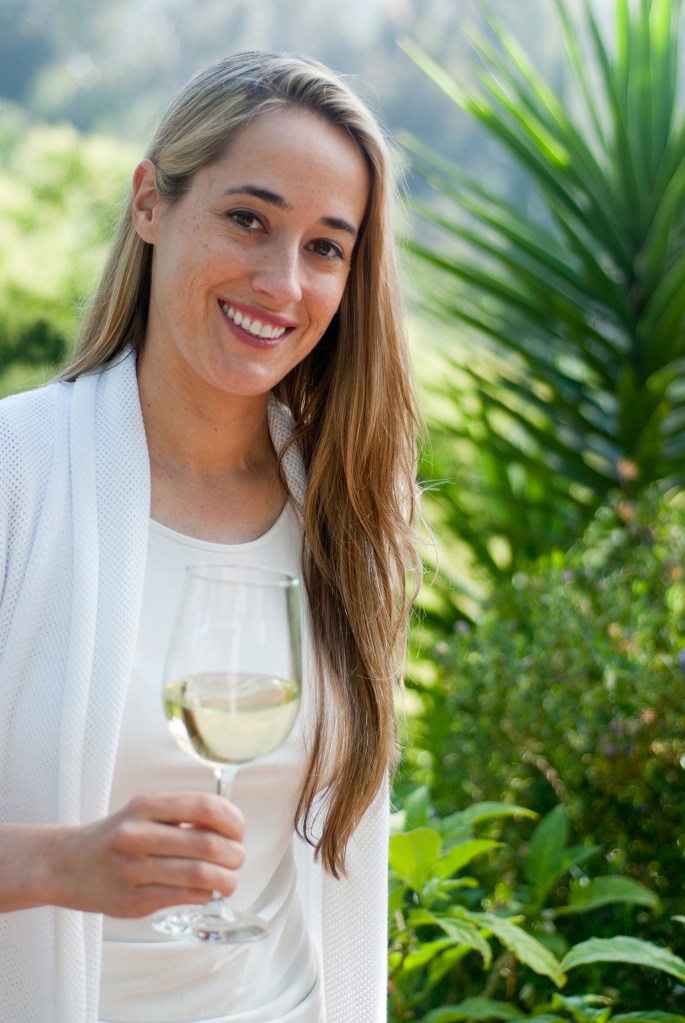
Nadine Nettmann is a Certified Sommelier through the Court of Master Sommeliers and the author of the Agatha Award–nominated Sommelier Mystery series, which includes Decanting a Murder, Uncorking a Lie, and Pairing a Deception. Born in Los Angeles, she works full-time in the wine industry and enjoys discovering the history of the city she still calls home. For more information, visit www.nadinenettmann.com.
 Chicks on the Case
The town my husband and I lived in for 35 years, is known for 3 things. Elsie the Cow the mascot of the Borden dairy company, and for Bathsheba Spooner. She was the daughter of a rich British sympathizer from eastern Massachusetts, during our colonial period. She married a successful business man and they bought a farm in Brookfield MA. He traveled a lot and Bathsheba was a “friendly” sort of woman who bored easily. She would take in boarders as they traveled through town. She fell in love with one, but was trapped in a loveless marriage and (long story short, but very interesting) she plotted with her lover and a couple of British soldiers to murder her husband and they threw him down a well. There is a wonderful book written by Andrew Noone that tells the story so well, you feel like you are there.
We are also know for the ONLY town that turned George Washington away on his march from Boston to Ticonderoga. The ignorant inn keeper didn’t believe it was Washington and turned him away. I really wish we had more positive history, but these are interesting, none the less.
Carol
LikeLike
The town my husband and I lived in for 35 years, is known for 3 things. Elsie the Cow the mascot of the Borden dairy company, and for Bathsheba Spooner. She was the daughter of a rich British sympathizer from eastern Massachusetts, during our colonial period. She married a successful business man and they bought a farm in Brookfield MA. He traveled a lot and Bathsheba was a “friendly” sort of woman who bored easily. She would take in boarders as they traveled through town. She fell in love with one, but was trapped in a loveless marriage and (long story short, but very interesting) she plotted with her lover and a couple of British soldiers to murder her husband and they threw him down a well. There is a wonderful book written by Andrew Noone that tells the story so well, you feel like you are there.
We are also know for the ONLY town that turned George Washington away on his march from Boston to Ticonderoga. The ignorant inn keeper didn’t believe it was Washington and turned him away. I really wish we had more positive history, but these are interesting, none the less.
Carol
LikeLike
Fun! I didn’t know that about Vine Street. Congrats, Nadine!
LikeLiked by 1 person
Thank you, Jennifer!
LikeLike
Your book sounds great, Nadine. I’m getting ready to write a book partly set in LA and I’ve never been there. Going to rely on the net for local color. I’ve done it before – hope it works out.
LikeLiked by 1 person
Thank you, Tom! It’s a lovely place and also heavily featured in movies so that will make your research easier!
LikeLiked by 1 person
I grew up in LA and had no idea about this history! (Though Vine Street–duh!) Researching my Sally Solari mysteries, I discovered that there was a big bootlegging operation down by the Boardwalk in Santa Cruz run by some of the Italian fishermen.
Thanks so much for visiting the Chicks today, Nadine. I’m SO excited to read this new book!
LikeLiked by 1 person
Thank you, Leslie! I love learning that about the Boardwalk in Santa Cruz! I can’t wait to return for a visit and think about those days and the bootlegging when I’m there. Thank you for sharing that fun fact!
LikeLiked by 1 person
Leslie, I had that same thought. Duh, Vine!
Nadine, your books are always so much fun. A lot of streets in my little town are named after founders whose ancestors are still here. I never really thought about the street names until I met the people. “Oh, like the street!” And they’d give me an exasperated sigh. But don’t get me started on the beloved spelling of our Mainstreet! I have to give people the smackdown when they spell it wrong.
LikeLiked by 1 person
Thank you, Becky! And that’s so fun about the ancestors having the same name! I would definitely respond the same, “Oh, like the street!” I once met someone with the last name Mulholland, like the street here in LA, and I thought that was the coolest thing. And I’ll be sure to note Mainstreet. Fun!
LikeLiked by 1 person
Welcome, Nadine! This book sounds fascinating!
I learned not that long ago that Buffalo, near where I grew up, is honeycombed with tunnels. Not necessarily connected. They are there for all sorts of reasons, including escorting William McKinley’s killer to and from the courthouse.
LikeLiked by 2 people
Thank you so much, Liz! And that’s awesome about the tunnels! I love that there are these secret histories that are literally buried beneath the cities. And wow on transporting the killer. Those tunnels really date back because (quick google), that was 1901!
LikeLiked by 2 people
Nadine, as an adopted Angeleno, I’m fascinated by the city’s history and this is such great info! I’ve been to the San Antonio Winery but now I want to try the other two you mention.
As to surprises in my hometown of NYC, I was walking on Sixth Avenue a few months ago and happened to notice a tiny synagogue between 2 buildings. Carved above the door was “Garment Workers Synagogue” and the date 1927. I think if I could go back in time, I’d go back to the 1920s. But I’d need to find a bootlegger to get me my wine!
P.S. Nadine’s book is wonderful. I highly recommend it.
LikeLiked by 1 person
Thank you, Ellen! And that’s fascinating to find the Garment Workers Synagogue from 1927! I’d love to transport back for a moment, kind of like in Midnight in Paris. And yes to bootleggers providing you wine! I might know of one 😉
LikeLiked by 1 person
I love your book cover, Nadine. Absolutely gorgeous!
LikeLiked by 1 person
Thank you, J.C.! I was so excited when I saw the cover, they really did such a beautiful job!
LikeLike
I didn’t know how much wine was produced here. I wonder if the city would look very different now if we hadn’t had Prohibition (leaving room for wineries) or if we’d still have the sprawl we do now.
I had to laugh when I was reading your book thinking about the area the main character lived being covered in pavement now for subdivisions. How much things have changed in 100 years.
LikeLiked by 1 person
It’s fascinating to think about and how the land has changed so much! I love looking at all of the black and white photos from those days and then really love when I can see a side by side of the same area from then and now, with the same mountains in the background, but wow, a world of difference.
LikeLiked by 1 person
Nadine, Congratulations on the launch of a new series.Looking forward to learning more L.A. history with wine.
I am a huge fan of California wines but had no idea of the past winemaking history in L.A. i have visited Vine Street & Olvera Street but don’t remember seeing any vibes. But thrn again, I was not looking up!
LikeLiked by 1 person
Darn autocorrect. Should be “vines” not “vibes”!
LikeLike
Thank you, Grace! I’d been to Olvera street many times and never noticed until someone told me to look for it. I love that that part of history remains!
LikeLike
NADINE!! It’s so great to “see” you here! Congrats on the book, and thank you for sharing this gripping (grape-ing?) history with us. I had no idea!!
I was actually born in LA, but Bend is my true hometown. We have a few arcane claims to fame. I love that Clark Gable stayed here!
LikeLiked by 1 person
Thank you, Kathy! I love that you were born in LA! I’ve always heard amazing things about Bend and it’s on my travel list to make it there one day. And I really love that Clark Gable stayed there! Now I want to go watch some classic movies again. I love that era of Hollywood!
LikeLiked by 1 person
Come visit anytime, Nadine! ❤
LikeLike
I cannot wait to read your book. I love the old Hollywood and old San Francisco (my favorite city next to NOLA). My father managed four movie theatres in our hometown. He started as an usher in 1932 and worked his way up to District Manager of 4 theatres in South Texas. He only quit to be postmaster in our hometown as Interstate offered no pensions. That was in 1962. But movies have been my life forever. I never knew this about a winery being there, and I love the history of this area. I sometimes hate progress (subdivisions) as it ruins a lot of history. Thank you for resurrecting this.
LikeLiked by 1 person
Thank you so much! I love that your father managed four theatres, that sounds so cool! Makes makes me think of that movie, The Majestic. And I love that movies have always been a part of your life. Movies are so magical and I just love being transported during a film. Movies also preserve history in a way, not just in telling the stories, but I love watching older films and seeing how the areas where they filmed used to be.
LikeLiked by 1 person
Nadine, huge congrats–and thanks so much for visiting us at Chicks! Your cover is gorgeous and the story sounds absolutely amazing. On to my TBR list for sure! As an East Coaster who has only been to (parts of) LA once and loved it, I would believe just about anything about the city and California itself. The whole place seems dreamlike and magical to me. (Except for those casual little cluster earthquakes.) My hometown is technically Boston, and we were taught from an early age that its twisty streets and dead ends (maybe not so much the mystifying rotaries) were once old cowpaths that the colonists used to misdirect the occupying British soldiers.
LikeLike
Thank you, Lisa! I hope you come back to LA soon, Ellen and I can show you more of the city! And that’s fascinating that the twisty streets and dead ends were cowpaths that used to misdirect the soldiers. So fun! I love finding out history that leads to the format of certain things, in this case streets, in present day!
LikeLiked by 1 person
I ordered your book today and can’t wait to read it. Thank you for replying. Movies are magical. By the way, something special about my hometown was that my grandmother started the first hospital in Harlingen, Texas in 1923. It is now a museum after she lived in it as a home after a bigger hospital was built after her death in the late 1970s. She had sold her boarding house and restaurant–the Gilbert House–where she and my father and his siblings lived in the mid 1940s so she had to move somewhere. We ate Thanksgiving dinner there every year until she died. She was in her mid 90s at that time. She was an amazing woman. I wrote an article about her for a local internet newsletter.
LikeLike
That’s so cool that your grandmother started the first hospital there! And I love that it’s now a museum. I love being when places are preserved and we’re able to not only visit them, but walk inside them.
LikeLiked by 1 person