I go on two longish bike rides a week, and to pass the time—and take my mind off my burning calves as I climb steep hills—I think about various things. Often, I use this time to brainstorm ideas for my books, and right now, as I try to come up with a plot for book four in my Orchid Isle mystery series, that’s largely on my mind as I pedal along the ocean, watching the Brown Pelicans as they soar above me.
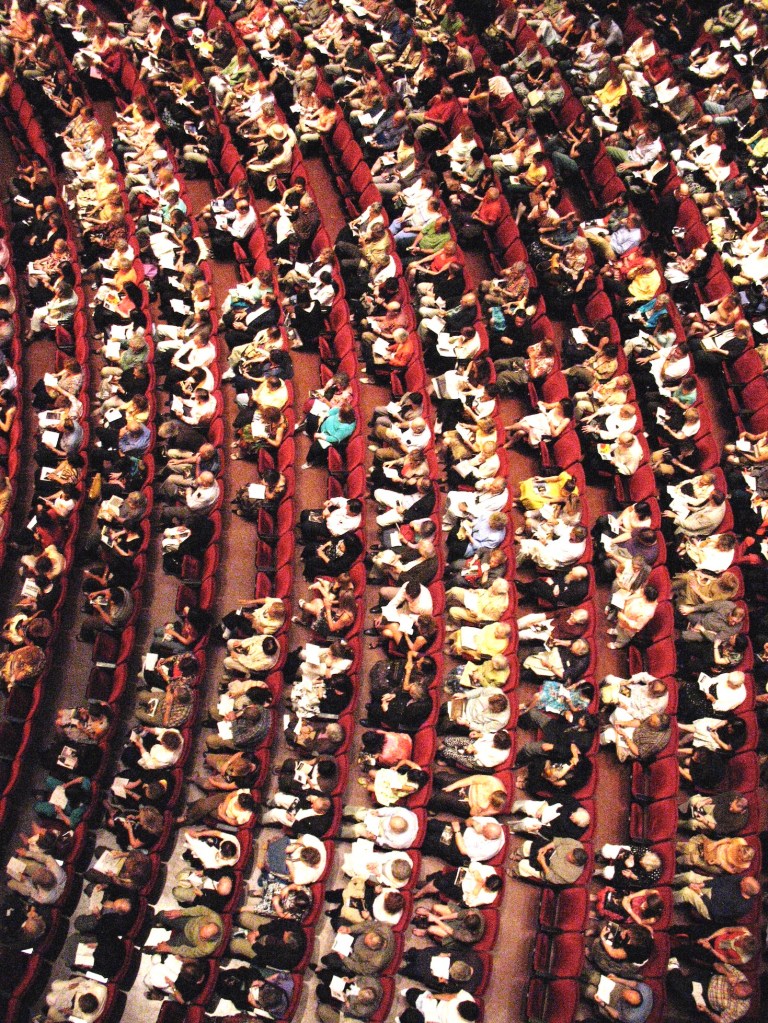
But I can’t always control where my mind wanders, and so the other day, as I took in all the joggers, dog-walkers, and other folks crowding the path along West Cliff Drive here in Santa Cruz, I suddenly wondered: Has the fact that the human population has more than doubled over the past fifty years (not to mention the increase in dogs, cats, rats, and other critters) resulted in an increase in the mass of the Earth?
I was pretty sure I knew the answer (no), but nevertheless, as soon as I got home, I sat down at my computer and Googled this question. Because assuming I was right, where did the mass for this enormous increase in life forms come from?
Ever since studying astronomy in college, I’ve been fascinated by the fact that we are all in fact quite literally stardust, just like in the song from Hair. (Or, as Carl Sagan so elegantly put it, “The nitrogen in our DNA, the calcium in our teeth, the iron in our blood, the carbon in our apple pies were made in the interiors of collapsing stars. We are made of starstuff.”)
Well, it turns out that we are also all “earthstuff.”
Our planet is what’s considered a “closed system” with respect to mass, in that it doesn’t ever gain or lose significant amounts mass (aside from bits of meteoritic material and space dust—which are added—and items such as satellites and Teslas that we’ve shot into space—which we lose).
So when plants and animals reproduce, although they do create new living organisms, this process primarily involves the transformation of existing matter (soil, gases, nutrients, water, etc.) into new organic material. Hence, when a baby is born, it’s not as if new atoms are being created out of thin air. The matter that makes up the baby was previously part of the mother’s body, the food she ate, or the air she breathed. And when organisms die, their mass is returned to the ecosystem—either via decomposition or, if cremated, primarily as gases.
One question I wasn’t able to answer from my brief and simplistic internet research on this subject, however, is whether the enormous increase in populations of all the living organisms on the planet over the past millennium has had some identifiable impact on, say, the thickness of the Earth’s crust or the volume of its oceans—i.e., have they reduced in any discernible way?
If any of you know the answer to this, let me know in the comments.
And do also tell me what worldly or bizarre questions your brain comes up with when bike riding, walking the dog, or vacuuming your house!
 Chicks on the Case
Leslie, your post reminded me of how much I loved riding my bike. I don’t anymore, because arthritis. But when I did, I let my mind wander the same way. We don’t truly comprehend the enormity of the planet, much less the cosmos, and how insignificant we are
LikeLiked by 4 people
I’m so sorry you can’t bike anymore, Tom, but I hope you can continue to think great thoughts whilst walking or some similar activity!
LikeLiked by 2 people
Maybe this isn’t related, but I’ve been reading about how massive dams, collecting all those tons of water in one place (or several places, for each dam) are slowing the spin of the earth. That’s good for me, I need longer days. I say, build more dams.
LikeLiked by 4 people
Lol, Kaye! And I wonder if that’s really true….
LikeLiked by 1 person
I don’t remember if that’s a theory or more of a finding. But it makes sense to me. Of course, we’re talking about extremely small amounts of variance.
LikeLiked by 2 people
Bring on the beavers!
LikeLike
I have to admit, my brain does not get as involved in weighty questions in situations like those. It’s mostly things like, “Did I turn the stove off before I left the house?”
LikeLiked by 4 people
Ha! I certainly think about things like that, as well, Liz!
LikeLiked by 2 people
Leslie, I love your post. I let my mind wonder while exercising, too. (Except during weight training. Dicey.) I often wonder about aspects of The Butterfly Effect.
LikeLiked by 2 people
Sorry! And by The Butterfly Effect, I’m referring to actions we take that could have unexpected consequences in other places or other times. As a simple example, if we cut down a tree in one forest, would it impact the ecosystem in another forest? How?
LikeLiked by 2 people
Ooh, that’s a good one, Patricia!
LikeLiked by 1 person
Yes, gotta count while doing weight training, which makes it hard to think about anything else. But yes, the Butterfly Effect, for sure! But now that I think about it, doesn’t EVERYTHING that everyone does have the potential of having the B. E.?
LikeLiked by 2 people
Yes, I believe everything we do triggers The Butterfly Effect, from the kindness we show others to the condo complex going up around the corner and across the street from my home. (No, I’m not irritated. Much.) I find The Butterfly Effect fascinating.
LikeLiked by 3 people
Agreed, Patricia!
LikeLiked by 1 person
Boy am I aware of the dying coral reefs, living half time in Hawai’i. And yes, we certainly effect the Earth in other ways than altering its mass distribution!
LikeLiked by 2 people
I’m with Liz. I don’t usually ponder such deep topics. My hubby is usually the philosophical one.
I lean toward thinking that increasing population must affect our land and water somehow, though–but maybe in negative ways, like receding barrier reefs!
LikeLiked by 3 people
Excellent point.
LikeLiked by 1 person
That’s what’s great about thinks like riding a bike or driving… you can’t distract yourself with screens. When Tim and I go for a walk we actually talk to each other, and I love taking roadtrips because that’s when I do my best thinking! Thanks for sharing your thoughts today — and for the reminder that we’re all stardust!
LikeLiked by 3 people
So true, Marla! Robin and I dedicate cocktail hour each day to talking to each other.
LikeLiked by 5 people
Aww, so sweet!
P.S. I love having roadtrips because the kids are forced to talk to us! Well, after I ask them to take out their earbuds…
LikeLiked by 3 people
LOL!
LikeLike
This is fascinating and also stretches my science-challenged brain. BUT I’m glad you’ve given me a chance to ask MY one worldly question: if there are a finite number of musical notes, doesn’t that mean that eventually there will be no more songs to write because someone will have worked through the final combination of notes?
LikeLiked by 5 people
Ellen, you’ve blown my mind.
LikeLiked by 1 person
LOL, Patricia. And great explanation, Leslie.
LikeLiked by 1 person
Eek! I certainly hope not!
LikeLiked by 1 person
There are actually an infinite number of musical notes, because you can raise or lower a pitch by incremental amounts to create a new “note” (e.g., what are called “blue” notes or tones in jazz). But yes, with the Western 8-tone scale (along with its sharps and flats), the number is quite limited. Which is why it is indeed difficult to come up with a truly original musical phrase or hook for a song (says this one-time songsmith).
LikeLiked by 2 people
😍😍😍 Love your answer! Thank you!
LikeLike
I’m glad you took the time to research the question for us. Because it had never crossed my mind, but as soon as you asked it, I needed to know the answer myself.
LikeLiked by 3 people
Ha! Isn’t that so often the case, Mark!
LikeLiked by 1 person
Cool post, Leslie! I don’t work out much, so I “ponder” things all day long. These days, I’m mostly absorbed in thinking about the multiverse. (I saw Fantastic 4 recently and didn’t find out until I read afterward that the setting was a parallel Earth that existed in a timeline where things split off in the 60s and one Earth carried on as if the things people imagined in that era had actually come to pass, in a Jetsons sort of way…Seemed like a fun place to leave (sans intergalactic monsters).
LikeLike
My brain is boggling right now–thank you! The stardust idea is so beautiful.
Sounds like you get a workout of both mind and body…very healthy, Leslie!
LikeLiked by 1 person