
Jen here, and it’s always a pleasure to have Michelle on the blog. I’ve been on some recent trips, and I love collecting travel tips. Thanks for sharing your wisdom, Michelle!
What Travel Guidebooks Don’t Tell You
I love to travel, and with a big trip planned for this fall — part book tour, part visiting friends, part vacation — I’ve realized how much I enjoy anticipating travel too. The research, the daydreaming, imagining what if.
Throughout my life, I’ve traveled a lot. I’ve backpacked through Europe, Central America, and Southern Africa and helped rebuild communities after war across Africa, East Asia, South Asia, and the Pacific. Along the way, I’ve picked up a few travel tips you may want to consider while you’re planning your next trip.
Know your travel vibe
There are two ways to travel: to see or to savor.
Travelers who focus on seeing optimize their visit down to the last detail, booking much of their trip in advance. They know the top restaurants, which side of the train to sit on for the best view, and which sites they want to see at each destination. It’s efficient, yet it can result in traveling by checklist, skimming the surface, not exploring what’s underneath.
When time allows, I prefer to savor. I’ll book transportation to my destination and most likely where to stay, then let the rest of my trip unfold with the weather and my mood. I’ll meander down a charming street, board a bus with no set destination, pick a restaurant by the ambiance I view through the window. It takes more time, but you get a better sense of a place, and in my opinion, a fuller experience.


People-watch with gusto
Nearly everyone likes to people watch, but most feel a bit guilty about it and look away the moment they’re caught. I’m an anthropologist, so I watch people constantly; even more when I travel, because people are the place, way more than any monument or museum. I like to find a park bench or window seat and see who strolls by or what drama unfolds. Watching these types of daily interactions can tell you more about a destination than any guidebook can.

Talk to strangers
Engage with strangers, but skip the small talk and dig a bit deeper. Ask a baker what she’d eat if she could only pick one thing from her own shop. Ask the older man sitting next to you on the bus what the town was like twenty years ago. People will continually surprise you with what they have to say.
Pack half of what you think you need
If you travel a lot, you eventually learn that you need a lot less than you think. If in doubt, leave it behind. You’ll move easier, worry less, and if you truly need something, you can always buy it wherever you go (and then you have a cool souvenir that brings back good memories).
Leave room for the unexpected
Think of your itinerary as a menu, not a legal contract. When something unplanned catches your fancy — a market, an alley, a conversation — go with it. In my experience, the best moments of any trip have been the ones I didn’t plan for, the ones that took me in totally different directions.


Take pictures, and notes
Photos capture what a place looks like. But they can’t capture what you felt when you saw the Mona Lisa or the emotions that surged through you with your first glance of the Grand Canyon. Write these things down, a few lines in a notes app or notebook. This helps you remember not just what you saw, but what you experienced.
In the end, the best travel advice I have is simple: pay attention. What you bring home isn’t really about the places you visited, it’s about what happens when you slow down enough to experience them.
Happy travels.
Do you have any travel tips that you’d recommend, or examples of a hard lesson learned from traveling?
ABOUT A FIELD GUIDE TO DEATH & DECEIT:
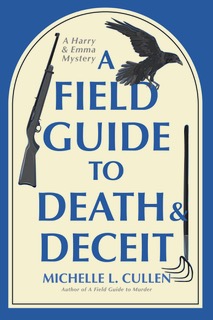
Widower and anthropologist Harry Lancaster and his Gen Z colleague Emma are back for more murder and mayhem when they stumble upon a dead farmer.
This delightful sequel to A Field Guide to Murder is perfect for fans of Richard Osman and Benjamin Stevenson.
When an odd request leads Harry Lancaster to agree to meet his former sweetheart Willow at a farm on the outskirts of town, Emma’s suspicions run high, and she insists on joining him. Instead of Willow greeting them when they arrive, they discover the farm’s owner dead, with a corn rake embedded in his back.
After being interrogated by the police, Harry and Emma return to his home to find a bereft Willow, who admits she lost her life savings in a real estate scam involving the farm. Worried Willow will become the main murder suspect, Harry decides to help her, despite Emma’s concerns.
To bring the swindlers—and murderer—to justice, Harry recruits his potentially shady, financial-whiz brother and a neighborhood teenage hacker. Then Willow’s realtor is declared missing, and Harry’s brother is caught up in the fray.
As the team unearths clues, they increasingly dodge danger in their race to save Willow and Harry’s brother before anyone else turns up dead.
ABOUT MICHELLE:
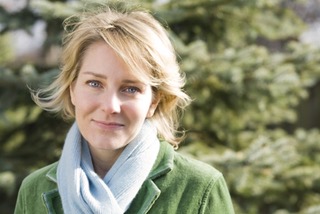
Michelle L. Cullen has lived, traveled, and studied all over the world, from working as a bilingual secretary in Paris; to backpacking around Europe, Central America, and Southern Africa; to helping rebuild communities after war throughout Africa, East Asia, South Asia, and the Pacific. She earned her master’s degree in anthropology at Melbourne University and her PhD in sociology at the London School of Economics. A fan of adventure, she has a black belt in Tae Kwon Do, has summited nine-hundred-feet rock climbing, and has flown a helicopter. She currently lives in Annapolis, Maryland, where she’s either doing yoga, playing outside, or plotting murder.
 Chicks on the Case
Great tips. I’m a little bit of both to see and to savor, which allows for spontaneity when I travel.
Congrats on your upcoming book release. I enjoyed the book and look forward to book #3.
LikeLiked by 2 people
Thanks, Dru. I’m with you, I like to travel to see and savor 🙂
LikeLike
Great post and spot on. The tip. Don’t travel to the airport on your final day. Stay there the night before. We almost lost a non-refundable ticket because we took a wrong turn in France.
LikeLiked by 2 people
Oh no! Glad you made it!
LikeLike
Thanks, Tom. And yes, rushing to the airport is not a great way to start a trip!
LikeLike
Congrats on the sequel, Michelle! I agree with traveling light…because you can always wash clothes or get something on your trip.
Another tip? Make sure your layovers are not too tight. Any delays will result in hassles with getting stranded (ask me how I know 😭)…
LikeLiked by 1 person
Layers, very good advice, Jen. And it sounds like you have a good (bad?) travel story about getting stranded…
LikeLiked by 2 people
Well, it was definitely an adventure! But we finally did get them to comp us some stuff…
LikeLiked by 1 person
I try to pack lighter then I think I will need. You really do not need all of those clothes. Leave room for items you buy or you will need another bag. I like to walk around and just pop into stores that appeal to me. I love thrift shops, museums and art so would go do those things. A meal at a restaurant would also be a fun end of the day. Deborah
LikeLiked by 2 people
The joy of under-packing is “having” to buy something while there 🙂
LikeLike
Sometimes I like wandering the streets and seeing what I find (especially bookstores!).
LikeLiked by 1 person
Oh, I do love Harry and Emma! Anticipating book 3 to see what they get into next.
I am a mixed bag traveler. I like to have a plan, but am open to whatever might present itself. Am working on traveling lighter, but it seems the older I get, less of it is optional! Meanwhile, I learned long ago to always ask the wait staff in a new place, what they eat when given the option. Have had some amazing meals that way, often items not necessarily on the menu.
LikeLiked by 2 people
Yay! I’m so glad you enjoy Harry and Emma as much as I do. Fingers crossed we get a deal for book three (and four)!
LikeLiked by 2 people
What great reminders! I’m on the road a lot – in fact we leave for England on Tuesday – and admit to being an overpacker. But I’m on two business trips in October where I won’t be flying on the airline I call my work husband – American – and checking a bag is so pricey now that I’ll have to step up and travel light.
Congrats on the release! And the series!
LikeLiked by 2 people
Thank you, Ellen. And enjoy your trip to England. It’s a great time of year to go! Good luck packing light 🙂
LikeLiked by 1 person
Have fun in England!!
LikeLike
I’m actually in Paris right now, on a month-long trip to France with my sister, and 90% of what we’ve been doing is being what the French call a “flaneur”–simply wandering around the city and checking things out: store fronts, buildings, bicycles, dogs, street art and graffiti, and most importantly, people. Heaven. (And yes, for the entire 4 weeks, I packed merely a carry-on suitcase and a day pack.)
Thanks so much for visiting the Chicks today and congrats on the new book–it looks terrific!
LikeLiked by 2 people
Thank you, Leslie. Funny, I mastered being a flaneur while living in Paris 🙂 Have a pain au chocolat for me.
LikeLiked by 1 person
Hurrah, Leslie! And loving all your travel photos!
LikeLiked by 1 person
A carry-on and a day pack for 4 weeks? Wowza! I’m so impressed.
LikeLike
I don’t plan like I should. Of course, it helps that I’ve traveled with those who have. I just can’t seem to get to it even when I want to plan more. Too much else going on in my life.
LikeLiked by 2 people
The new book sounds great!
We’re homebodies (nowadays most of our “travel” is getting to out of town doctor visits). The last time we took a real trip was our honeymoon to the Montreal/Quebec region of Canada (September 1980). Advice? Do your best not to tick off any locals. We were driving in my husband’s second-hand car (’67 Chrysler New Yorker) and the French speaking attendant at a gas station gave us non-leaded gas when it needed leaded (neither of us spoke French; the attendant asked us something [apparently whether we wanted lead or no-lead gas]). The car knocked for a bit; that was the worst thing that happened that trip…
LikeLiked by 2 people
Thank you, Mary. The new book was so fun to write. Sounds like your honeymoon was quite the adventure.
LikeLike
I love everything you said! My series moves from place to place because I love to travel, so each book gives me the opportunity to spend time in a different locale.
I especially love “Leave room for the unexpected.” When I was driving back from British Columbia to catch the ferry back to the states, my friend and I saw a sign on the side of the road with an arrow that said “Goats on a Roof.” Luckily, we had time because no way was I going to miss goats on a roof! It was a tourist trap, but an adorable one, with actual goats up on a grass roof. That’s become our shorthand for serendipity and spontaneity!
LikeLiked by 2 people
Thank you, Marla. I love that story! And now, I must go read all your books, I love the idea of a moving series.
LikeLiked by 1 person
I totally would’ve stopped to see goats on a roof!
LikeLiked by 1 person
Michelle, huge congrats on A FIELD GUIDE TO DEATH & DECEIT–and thanks for visiting us Chicks today! I am the last person who should give any sort of travel advice. I am a horrific overpacker, because while I love adventure and make zero concrete plans, I also like to take a few “security” items–like a favorite robe that doubles as a blanket if needed. I do better in warm locales, “stuff”-wise–but as a New Englander, I always want to be prepared and comfortable in any weather. With, um, appropriate shoes to match. And what if I got invited to, like, a party? (ha) Or my swimsuit didn’t dry fast enough? Or…
LikeLike
Michelle, congratulations on A Field Guide to Death & Deceit! I’m so excited for you and for readers. And thank you for sharing your travel tips. I’m already thinking about my travel vibe.
LikeLike