Lisa here, with an updated version of a post I wrote 6 years ago about the publishing world and its relationship with ever-evolving and “improving” tech. GRWM (Get Ready with Me) and see How it Started/ How It’s Going …
Greetings, Dear Readers! Thank you for opening this post, because I know you have many choices in your feed or inbox. Many, MANY choices. Maybe, like me, you’ve been furiously toggling between nonstop “important” emails, price-increase announcements, breaking news headlines, relentless ads for questionable products, fundraising pleas, and videos of cute pets with physics-defying abilities.
I don’t even open those gushing emails from Louise Penny and Emily Henry and Jim Patterson anymore. Even though they’re DYING to discuss my next book. Or the London and New York Book Clubs, who just discovered the Irish Bed & Breakfast Mysteries. Sad, really, but who has time to deal with all these accolades and opportunities?

(OLD POST):
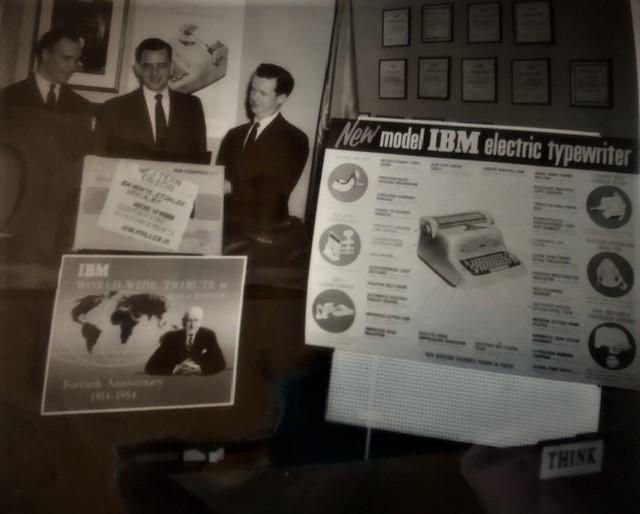
Because my dad was a devoted employee of the IBM Corporation for 40 years, you’d think I might have had a jump on the whole computer thing as a kid. I’m sure that’s what he hoped, anyway. But by the time I hit my teens, when computers were still large enough to fill entire rooms, even my dad had to admit that my career path was headed in an opposite, far less lucrative direction.
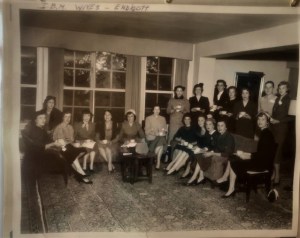
In the late 70s, before Take Our Daughters to Work Day, I got to visit my dad’s office. Walking through a series of doors that opened like the ones that greeted Maxwell Smart was cool (and mildly unsettling), but I knew right away I’d entered a very different world. The office was filled with men in suits, white shirts and black rimmed glasses and secretaries who looked like they’d stepped out of Mad Men. A few younger, male employees in the advertising department wore blue shirts and aviators, with their hair just a tad below their ears, but they were definitely in the minority. Apparently the dress code hadn’t changed much from when my dad started his career in the 40s selling typewriters. (Here’s a pic of the wives, too, just for fun.)
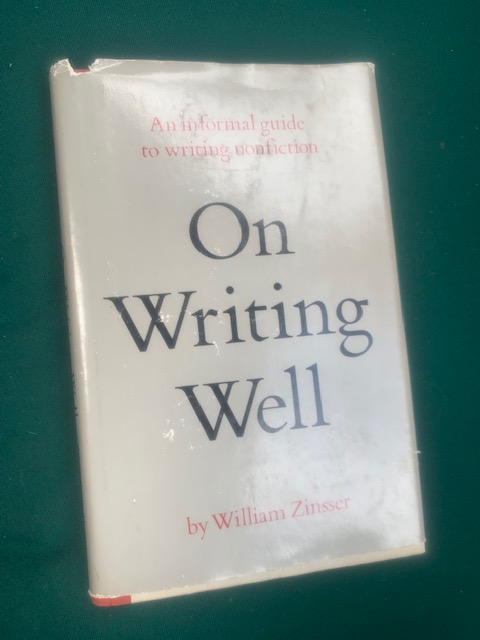
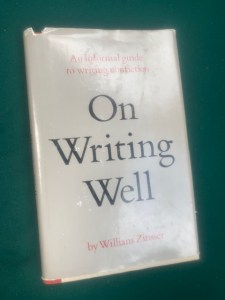
I met with a lot of people that day. They were all very polite, and told me there were great opportunities coming up for women in the computer field. Or maybe I could go into sales or become Personnel Director like my dad. But one of my “interviewers” (I was still in high school) was different. The editor-in-chief of Think magazine (“Think” was the corporate tagline), his office was lined with books. “Your dad tells me you’re a writer,” he said, taking a puff on his pipe. Then he pulled a book out of his drawer and pushed it across his desk to me. “You’ll need this,” he said. “Good luck.” I still have the book. A classic:
I didn’t actually interact with any computers in college, other than the odd game of Treasure Hunt (1982). To do so, I would have had to take Computer Science 101. It was offered by the math department, so I didn’t bother reading the catalog description. I did, however, keep my roommates company during their all-nighters in the computer lab, as they created and trashed endless punch cards and literally prayed their programming would finally work.
After I graduated and started working in publishing, I found myself facing a familiar logo on a daily basis: IBM, courtesy of my Selectric typewriter. All was well, until we assistants on Editorial Row had our precious typewriters removed, and replaced with the ugly, chunky beige machines we were told would make our jobs a breeze–once we got used to them.
It took a while, with a lot of computer switches (publishers can never decide: to Mac or not to Mac?) and manuals and training classes on the relentless march toward Desktop Publishing. None of us editors really understood that concept, until we received the news: We were going to edit directly on our screens. Bye-bye paper, they told us. Sayanora, blue pencils for editors and red for copyeditors and green for proofreaders and All. Those. Sticky. Notes.
Unfortunately, the early programs allowed us to work on only a paragraph or so at a time. It was a disaster. Some editors tried hard to embrace the new technology. Others complained. Some quit. A few cried. They couldn’t edit that way, they said. It didn’t feel the same. The mystified suits threw up their hands. “Creatives,” they muttered. But a new line was added to the budget: Freelancers to input authors’ mss.—with our edits—into the computer. Then those pages were printed out, and the copyeditors went to work. The sticky notes remained (so much fun to photocopy).
Soon after, a new drive began toward digital books. The publisher I worked for was developing its own e-reader. We editors got to test out an early prototype one weekend, because they wanted the opinion of diehard readers. Early Monday morning, a development person knocked on my office door. “So, what did you think?” he asked eagerly. I told him (politely) that I hated it. And it didn’t work in sunlight. Apparently the other editors agreed, because the developers went back to the drawing board—and then abandoned the idea altogether.
(OLD CONCLUSION):
Eventually, we all embraced—or learned to live with—the Dread Technology. Cut to the present (Note from Lisa: this was 2020): I am the author of an e-book mystery series. I’m a proud blogger here at Chicks on the Case. I enjoy interacting with readers and fellow writers on social media and take classes and attend conferences virtually. And I own an online business where I edit clients’ mss. solely on-screen, through the miracle of Track Changes.
How did this happen? I’m not really sure. Yeah, some days I want to throw my laptop against the wall. But that would be a mistake, I think.
Daddy, if you and my old bosses could see me now.
NEW CONCLUSION (Also the Comments question!):
Authors, so where do you think we are we headed as we motor the ever-winding publishing road? Have AI bots moved from the backseat, where they incessantly whined “Are we there yet”?, to the passenger seat where they offered uninvited and not-so-helpful directions, to the actual driver’s seat?
Readers, how do you feel about AI-written (or highly assisted) books? Do you feel you can tell the difference? Is there any hope for human authors, or with AI driving are we headed off a cliff like Thelma and Louise?
LISA Q. MATHEWS is a regular contributor to Chicks on the Case and the author of the Irish B&B Mysteries, the Ladies Smythe & Westin series, short mystery fiction, and many kids’ books. Visit her website and sign up for her newsletter at lisaqmathews.com.
 Chicks on the Case