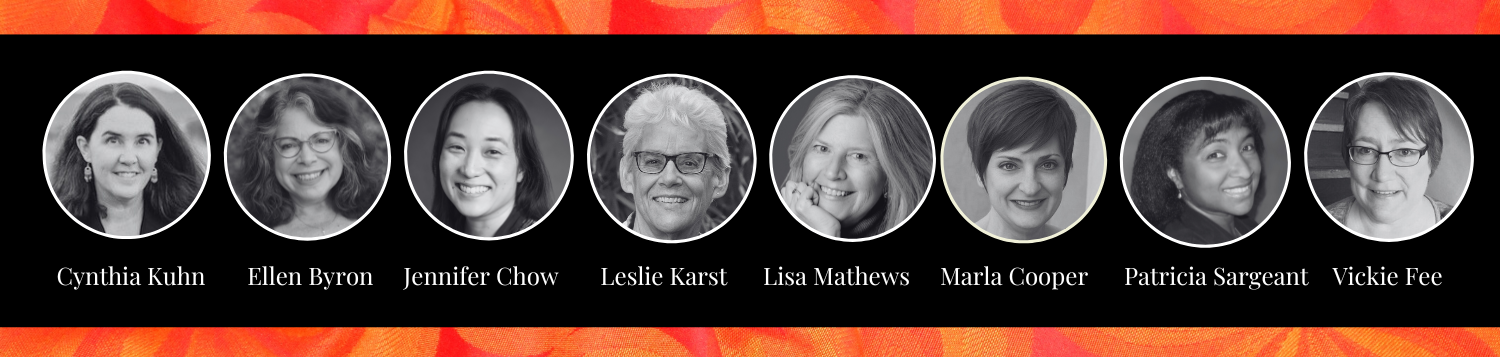
Leaning into the Halloween theme, let’s talk about putting on our costumes — or rather, getting into character. How do authors develop their protagonists, antagonists, and supporting characters? Do we channel our characters or leave the sculpting to our Muses? And how relatable do readers want their protagonists to be? Do we want characters who could live next door or would we prefer to meet someone new?
Lisa Q. Mathews

I’ve been told by some readers that my characters may be a bit too relatable, ha. (Is that a good thing or a bad thing?) My sleuth’s younger sister has a lot in common with their younger sister, or the dad reminds me of their dad, my sleuth herself tries to juggle the needs of her kids and everyone else in her family and hold things together (oh, and solve murders). I always tell people that I look at my characters and the crime strictly through a motivational lens. What is it that character really, really wants and how do they approach that goal (which may not be a conscious one) and how are they thwarted? Or, maybe they end up with a different result, for better or for worse. But the crash of motivations is what runs the story. I sort of see a little movie or TV show in my head and write the dialog and action as everythng unfolds. I rarely know the killer when I start, or if I do I often change my mind, depending on what I learn about the characters along the way. And yes, I am a little crazy, did I mention that?
Ellen Byron

I think for cozies, relatable is essential for your main characters. I start with basics like job, physicality, location, age. Then I add backstory, character traits, habits, emotional life, etc. When I’m building the supporting characters, I always think of the best way they can play off my protagonist. How do they complement her characteristics? I.e., Ricki in the Vintage Cookbook Mysteries leans toward insecure. Her friend Zellah is much more opinionated, and her friend Cookie is ballsier. But Ricki is more intuitive than her friends and often acidic when I write how she’s thinking.
When it comes to creating antagonists, I like to think of who will push my character’s buttons the most and engender a fun back-and-forth. Sometimes these characters magically appear. I.e., Teri Fuoco in my Catering Hall Mysteries didn’t exist in my proposal or outline. But halfway through the first draft, I realized Mia, my protagonist, needed someone to butt heads with. Their dynamic became the most fun to write in the whole series!
Marla Cooper

I’m also a fan of relatable! When I started the series, I was looking for an antidote to my daytime job, which means whatever happened, I didn’t want it to ever feel like work. That meant writing characters I enjoyed spending time with and who felt breezy, even effortless, to write. My main character, Kelsey McKenna, is technically based on a real person, but personality-wise, she has very little in common with her muse. And there is definitely some overlap with me, which made writing in close first person really easy. With other characters, it depends. Some just waltz onto stage and start saying their lines, while others (like Kelsey’s BFF Brody) are a composite of people I know.
Cynthia Kuhn
 The protagonists come first, and they need allies and opponents, so while the other characters can be in some ways intended to serve a function, they take on more and more characteristics as we go along. There are phases where I consciously craft characters and phases where they show me who they are. If I’m writing dialogue, for example, they often say things that teach me about them. I especially love it when they surprise me and/or develop an even bigger personality than I’d originally envisioned (looking at you, Calliope Nightfall)!
Leslie Karst

I tend to visualize my characters in my head as I write them, but I rarely do a whole lot of detailed description–just enough so that the reader can get a basic idea and then fill in the gaps in their own head. (And this is why I always try to read the book before seeing the movie made from it: I want to have my own idea of what the characters look like before some movie star takes on the role.)
As for protagonists, I like the ones in the books I read to be relatable–and relatively likeable. Which is why I tend towards traditional, cozy, and humorous mysteries. If I detest a character, there’s no way I want to read (or write) an entire books about them!
Jennifer Chow

My characters suddenly pop up, luggage in tow, to move into my mind. After they show up, I build their support network, characters who will aid (mostly) my intrepid sleuth. But these friends and frenemies don’t have to be relatable like my protagonist; in fact, they’re usually over-the-top. I mean, when you throw in characters like magical bunnies, anything goes! And oh, the suspects: I like to make them distinctive but all flawed, with maybe a dash of the unlikeable.
Patricia Sargeant

I need to come up with my protagonist’s name first, at least their first name. That way, when my husband asks who I’m talking to, I can tell him. I have different interview styles for my cozy mystery protagonists than my romantic suspense protagonists. I ask my cozy mystery amateur sleuths who they are, where they are in their lives, what is it that they’d most like to change about themselves personally and how sleuthing will help them attain that goal. My most important questions for my romantic suspense protagonists are what do they want and what secrets are they hiding? For both my cozies and my suspense, my hope is these questions will help me map my characters’ arcs.
Question: How much do you want to know about the protagonists in your story? Do you want to know where they came from, who they’re becoming, or both?
I take it-lots of characters out Saturday! Are you ready?
We are!
Love hearing how my fellow authors–and flockmates–craft their characters! Names are super important for me as I’m writing. If I don’t have the perfect name for someone, I can’t seem to write them. Calling them X or Joanie or something until I hit on the right name just doesn’t work (believe me, I’ve tried).
Lisa, I’m the same way. It’s hard for me to connect with a character until I’ve chosen the “right” name. LOL!
Me too!
You all are amazing with names. I’ll start with one and then switch it out. I also keep a list of names that I like, so I always have inspiration.
I do that too, Jen! I’m always afraid I’ll forget to change all the references to the old names after I change it. Ha!
I love the meme about someone doing a “replace all” from the name Will to Charlie in their MS and neglecting to click that it’s cap-sensitive. (“I doubt I Charlie be able to do that.”)
So true, Lisa! And it’s so weird how when you hit on the right name, you just KNOW it.
Thank you to all my Chick friends for sharing how they develop their story characters. I got quite a few awesome tips. LOL! xoxoxo
Same! I’ll be referring to this post again.
So fascinating to read how others come up with characters! And the way they visualize them! I’m Team Lisa, as I see my characters acting in a little movie…
I want characters who are relatable and likable. If I am spending a ton of time with them reading about them, I want it to be enjoyable. Which is one reason I tend toward the cozier side of the mystery genre. I want to root for the character I’m reading about to win.
Excellent point, Mark! Especially in a cozy mystery, I need to be able to relate to the characters and their motivations for investigating the mystery. I watched an episode of a cozy mystery series the other day. The protagonist deliberately avoided telling her police detective friend that she was going to confront a psycho criminal and twisted her boyfriend’s arm to get him to go with her. I wanted to jump into the TV and pinch her hard enough to leave a bruise.
Agreed, Mark! If I find I’m hating the protagonist–no matter the genre–I’ll stop reading pretty darn quickly.
Totally agree with this!
Mark, a hundred percent agree.
Is a rose by any other name really a rose? I’ve been working on a cozy and I could not get a handle on the antagonist; she just was not coming together. Then I renamed her and all of a sudden there she was! I guess she just didn’t want to come until I was calling her by her correct name!
Robin, I love this revelation so much! Thank you for sharing.
Isn’t amazing how true that is? Writing is so strange…
Leslie, I agree. And if I try to explain this to non-writers, a lot of them will look at me as though I should be committed.
That is so interesting! I’ll have to try that next time I get stuck!
Hurrah! So glad you named your antagonist and got the juices flowing!
I generally learn about my protagonist as the story progresses. A lot of times there are (mostly pleasant) surprises. From there I get a name. But I usually wind up making a lot of name changes before the story is finalized because I realize they collide for some reason. Supporting characters often play off the protagonist (if the protag is brash, she has a friend who can rein her in, etc.).
Like Lisa, I often don’t know the killer at the start – or it changes midway through the book.
As far as my reading, I need my protagonist to be someone I can hang with for 300 pages. That doesn’t mean I have to LIKE them, but I need a reason to follow them. Not a huge fan of characters who have zero redeeming qualities.
I feel the same way. I need a reason to follow them, and I prefer to have at least some reason to admire them.
Great distinction, Liz. We don’t need to like them, just want to follow their journey.
Liz, I totally agree. It’s why I hated Gone Girl. Yeah, it had a great twist. But I found everyone in the book despicable. I felt icky after reading it.
Ooh, Ellen, great example. I think that’s why I wouldn’t be able to write a story like that. It does have a great twist, but I didn’t like any of the characters.
You all write such great characters this topic took some thought. I need to be invested in a character to keep reading. I may not love the character, but I need to know what is going to happen to them, for example Carrie Starr in Mask of the Deer Woman was not a particularly likeable person as the book begins, but I found her compelling and had to know what happens. I grew to relate to her in some ways as the story progressed. I also like to have the character’s story unfold as I read, so I do get to know them or at least understand their motivation more.
Cheers to you all for great characters and their very appropriate names!
So agree about having the right name! It’s dicey do a find-and-replace for a character’s name if it changes. Especially if you forget to click the “whole-word” option and end up with things like “bBobance” instead of “balance.” Just to throw out a totally-didn’t-happen-to-me (ha) example.